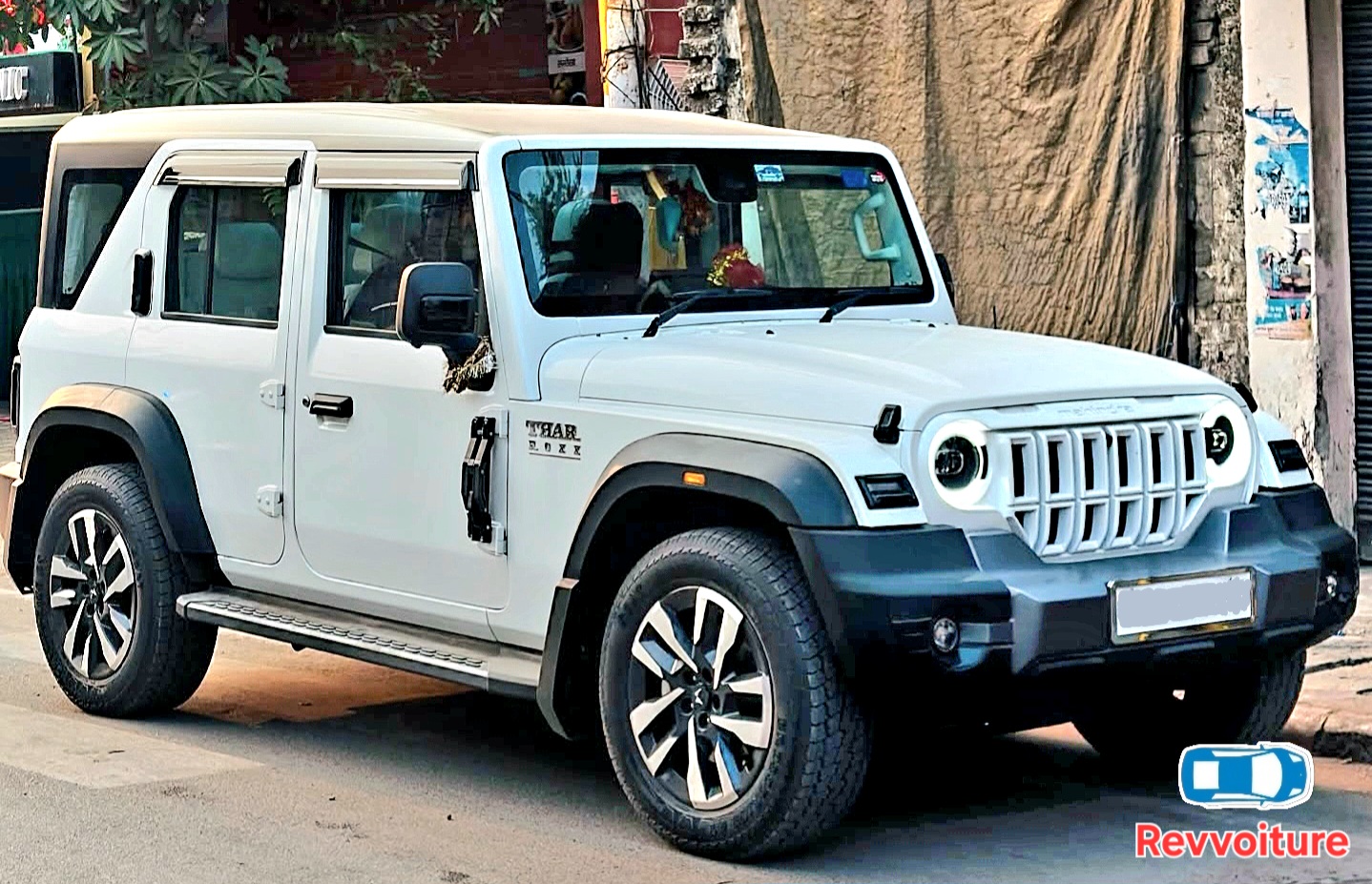
Mahindra THAR ROXX - New Variant, New Prices & New Benefits
The Indian car market today has a mix of domestic and international players, each of them has a niche in which they offer their platter of offerings. One domestic company, Mahindra, has handled a particular niche of SUVs for ages. Be it the Scorpio, Alturas G4, or an XUV300, each caters to a different customer type. In the same way, Mahindra also runs the famous Thar for those who love to do off-roading, or they think they do. The latest version of the 3-door Thar, 3rd generation to be precise, was introduced in 2020, and since then it has seen massive appreciation from enthusiasts, of course, but also from buyers and especially younger buyers. This 3rd-gen Thar was leaps & bounds ahead of the 1st-gen variant in terms of its performance, looks, and comfort. Even with all these pluses, the 3-door Thar could never be a family car, and this is one thing Indian customers have always looked forward to. Mahindra saw an opportunity here and introduced the 5-door version of the Thar called Thar ROXX to take things to another level. Why the name ROXX? It's just Mahindra's immature attempt to look cool in front of the younger customer base. The Roxx was launched on Independence Day 2024 and, within an hour, received almost 1.76 lakh bookings for its 6 trims - MX1 (base), MX3, MX5, AX3L, AX5L, and AX7L (top), combined with fuel options and gearbox options, resulting in a total of 18 variants to choose from. This was almost 2 years ago, so why should we talk about the Roxx now? Well, there are 2 updates this year that everyone should be aware of. First is the new GST update, making the Thar Roxx even more affordable. Earlier, the Old GST + Cess was at 48%, which has now dropped to 40%, so the benefit per variant ranges from ₹81,200 for the base MX1 to ₹132,900 for AX7L top trim. So the new price for Thar Roxx in 2026 starts from ₹12.39 lakhs for the base variant to ₹22.25 lakhs for the top variant ex-showroom Delhi. Apart from this, Mahindra has launched a new trim in its line-up this year, and it is called the Thar Roxx Star Edition. This adds 3 new variants to the Roxx. Price range for the Star Editions is between ₹16.85 lakhs - ₹18.35 lakhs, which is a lot cheaper than the top model AX7L. The significant price cut this year is adequate to attract more customers, so it's good to know what the Thar Roxx has to offer in India, and what the Star Edition offers that is different from the normal Thar Roxx. There is competition from cars like the Kia Seltos, MG Hector, and Tata Harrier. The competition is even within its cousins at Mahindra, so what is it about the Thar Roxx that has attracted many towards it, and who should go for the Star Edition trim? Let us take a ride on this journey and find out.
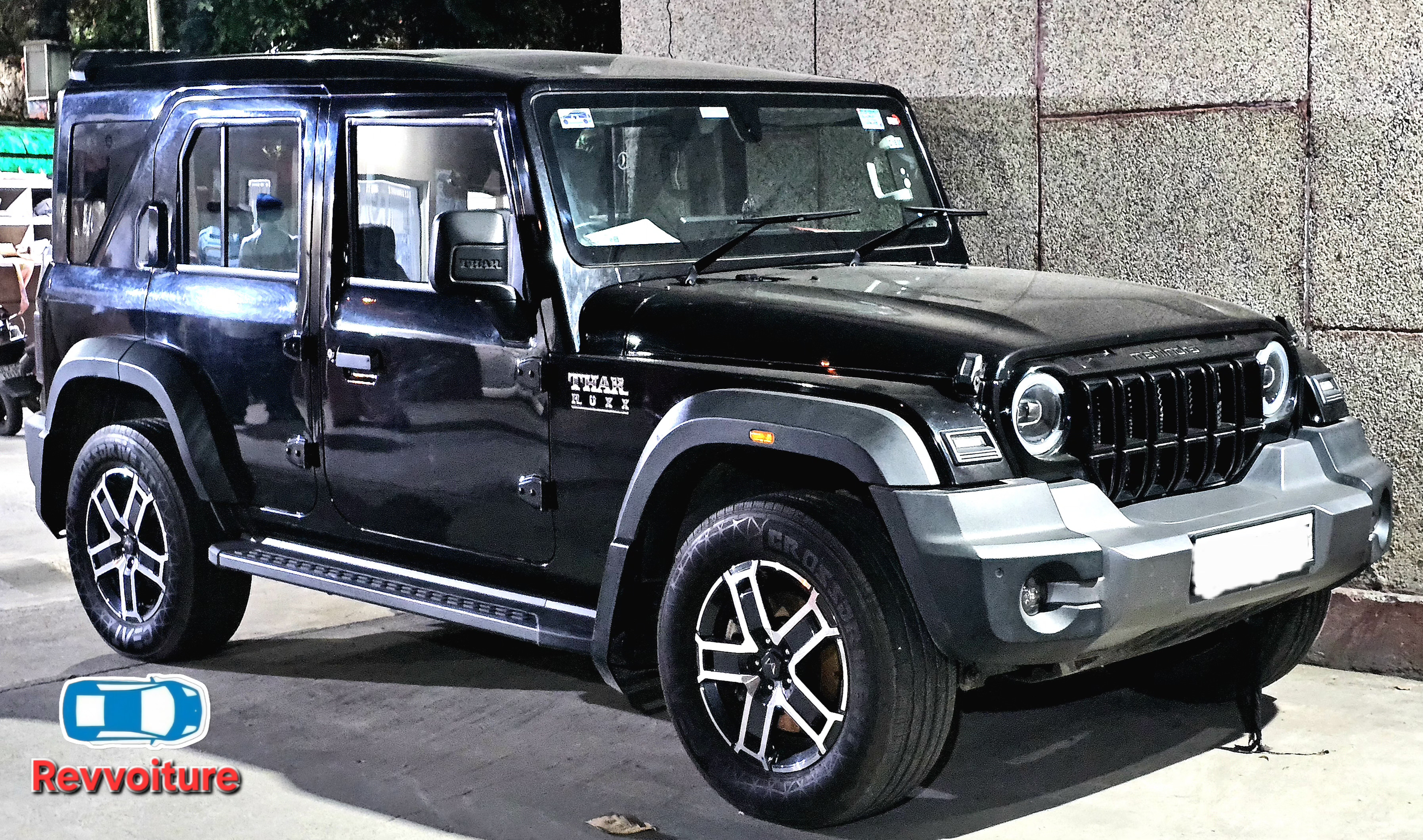
Engine & Engineering
Let us take a deep dive into the main aspect of any car in any part of the world, the engine, as well as its performance. Mahindra has carried forward both the mStallion and mHawk engines from the 3-door Thar to the new 5-door version, but thankfully, they have made significant tweaks. The Thar Roxx gets Turbo and non-Turbo engines for both its petrol and diesel fuel options. For the 2L 4-cylinder mStallion petrol variants, the Non-Turbo produces 160bhp & 330nm of torque, whereas the Turbo produces 174bhp and a whopping 380nm of torque. The 2.2L mHawk 4-cylinder diesel on the other hand, produces 150bhp & 330nm of torque for the Non-Turbo variant, and 172 bhp & 370nm of torque for the Turbo variant. The diesel-powered engine produces less power and torque, yet the top variant of the Thar Roxx gets a Turbo Diesel engine. Both the mStallion and mHawk engines come with either a 6-speed Manual and Torque Converter gearbox by Aisin, which was also offered in the 3-door Thar. The Roxx, as well as the Star Edition, has a 57L fuel tank capacity, 12L more than the 3-door version, but unfortunately, fuel efficiency is horrible for both the petrol & diesel variants. The ARAI claimed mileage for the petrol variant is 12.4km/l and for the diesel its 15.2km/l on highways, but less for city, 8km/l for petrol and 9-10km/l for diesel. Available in 4X2 RWD and 4X4 options, in the 4X4, we can change from 2H, 4H, and 4L. To get more into detail, the 2H is the 2-wheel power even in a 4X4 because city roads and highways don't need that enormous amount of power. On dry city roads, this high gear ratio to the rear wheels is perfect. For off-roading, the 4H or 4L is used. On wet roads or sand driving or even gravel road driving, 4H or 4 High is used, bringing some speed and balanced torque as the gear ratio is low with low power, whereas 4L or 4 Low is used for proper off-roading on rocky mountains and steep hills, the gear ratio is high with high power at very low speeds. The point here to remember is that in both 4H and 4L cases, one cannot drive at high speeds, as it can damage the drivetrain system, especially in the 4L mode when the car is literally crawling over rocks. When driving at high speeds, always use 2H or 2 High. The 4X4 system is available only in the diesel mHawk engine and not in petrol for reasons not understandable. The Star Edition has only the 4X2 option, so it's bad news for off-roading enthusiasts. The top variants AX5L and AX7L have Electronic Parking Brakes with auto hold, but the Star Edition gets only a manual parking brake. Very high turning radius compared to the 3-door Thar, so that can be a trouble on tighter corners. Thankfully, Mahindra thought this through and brought the “Intelli Lock Assist” which locks the rear tyres when turning which eventually reduces the turning radius, this is good but what about tyre health itself as in this way it's going to go head on with the massive friction created, yes for only few seconds but the rear tyres would need replacement faster than the front tyres. This feature is only in the 4X4 variant. Just like the 3-door sibling, Mahindra has made the Roxx and the Star Edition a rugged SUV for off-roading, but the power-to-weight ratio is debatable. As a 4th-gen Thar platform, Mahindra built the Roxx on a Ladder-on-frame technology, making the car lighter with better driving dynamics, but still, body roll is expected. Speaking about the off-roading capabilities, the Roxx has a 41.7-degree approach and 36.1-degree departure, with 650mm of water-wading depth. Crawl Smart Technology is installed for automatic throttle responses to get over certain obstacles. We also get 3 driving modes - Snow, Mud & Sand for better drivability. As for the suspension setup on this off-roader, the front axle gets an Independent Suspension with Double-Wishbone setup, and the rear gets Penta-Link rear suspension, coupled with coil springs with dampers on all four corners, which results in a comfortable drive at high speed. The top model AX7L, as well as the Star Edition, get all 4 disc brakes, but the lower models get a drum brake for the rear. On paper, the Thar Roxx looks like it can perform well on off-roading, but the reality is, if we compare with its 3-door sibling, then the Roxx is no good because of its long wheelbase, it's best to enjoy the power on straight roads.
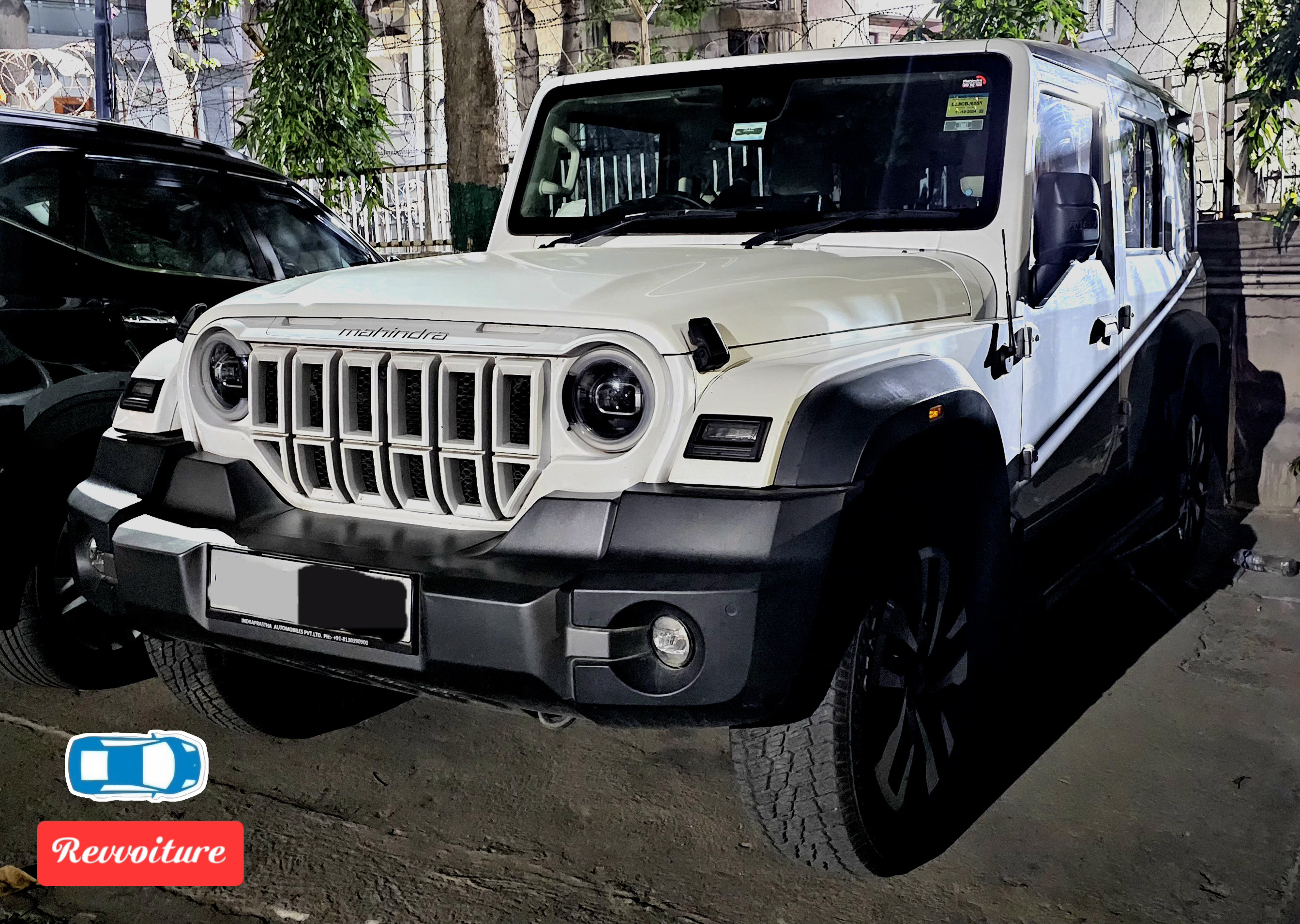
Design
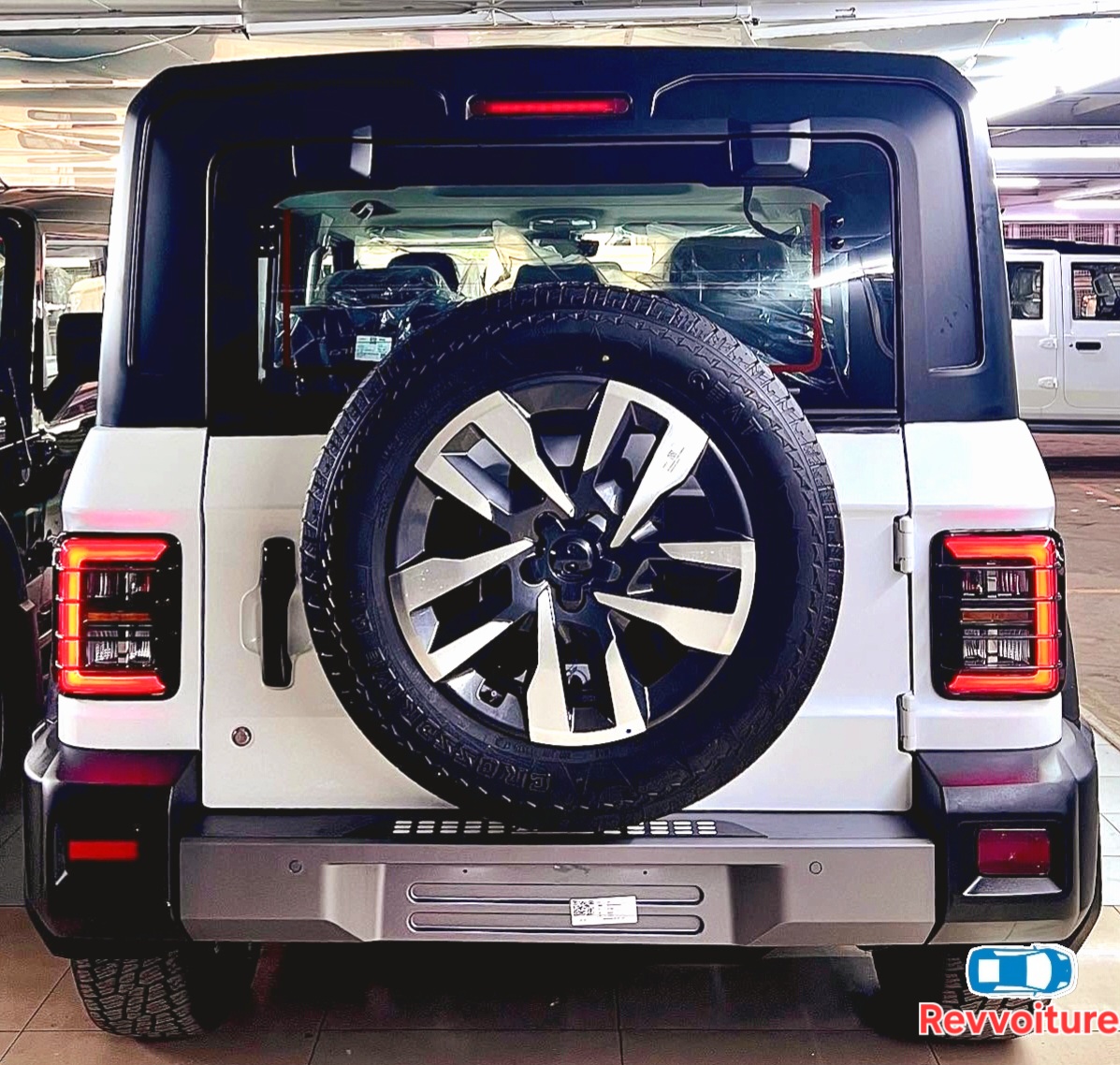
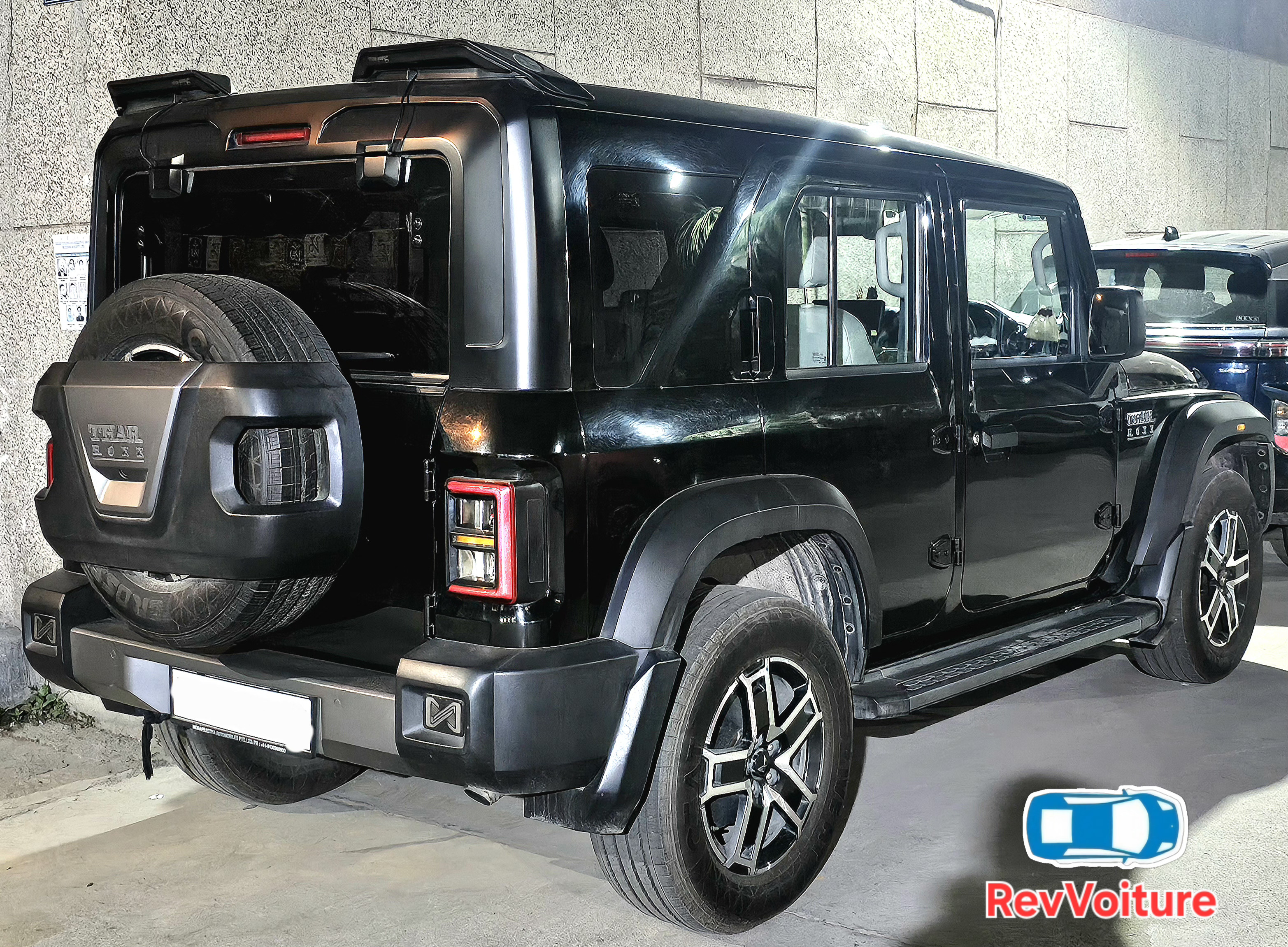
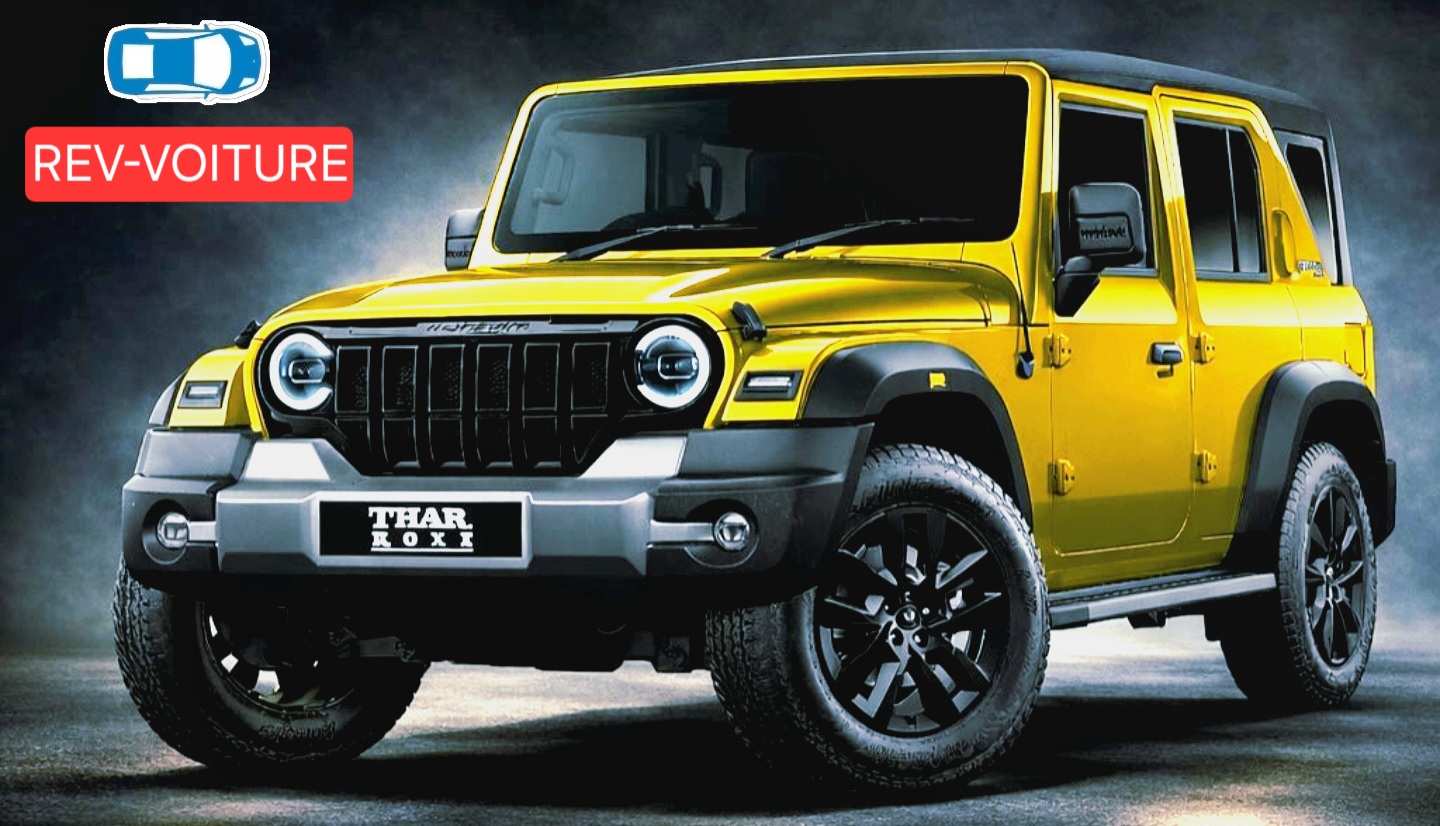
Looking at the Roxx, especially after witnessing the 3-door variant, the first thing that comes to mind is that it's massive, it's obnoxiously and incredibly massive. Mahindra has kept the same mould as that of the 3-door Thar, but just elongated it. This 4.43m long, 1.87m wide, and 1.92m high beast is approximately 443mm longer, 50mm wider and 68mm taller than its sibling. The wheelbase for the long Thar Roxx is 2850mm, 400mm more than the 3-door version, and even 100mm more than the Scorpio N. A ground clearance of 256mm is way too good for road driving and for off-roading too, but an extra wheelbase can hamper climbing mountains. Mahindra has not given a soft top for reasons unknown, so only the hard metallic top is available. Supporting 7 colour options for the Roxx - Nebula Blue, Stealth Black, Everest White, Tango Red, Deep Forest, Battleship Grey, and Burnt Sienna. 2 colours, Tango Red and Battleship Grey, are extra from the 3-door version. The Star Edition, on the other hand, supports 3 existing colours from the Roxx - Everest White, Stealth Black, Tango Red, and it also supports a special colour, Citrine Yellow, available only in the Star Edition and not in any other variant, although Mahindra did use this colour in the XUV 3XO, so we can get some idea. A new front grill with 6 double-stacked slots in body colour for Roxx and piano black for the Star Edition. The top variant AX7L and the Star Edition get 255/60 R 19-inch diamond cut alloy wheels, where the alloy wheels for the Star Edition are all black. The rest of the variants get 255/65 R 18-inch tyres, where the MX5 & AX5L get alloy wheels, and the rest get steel wheels. For an SUV, and especially an off-roader SUV, the alloy size should be small comparatively and provide more rubber for grip. If the rubber is not much and the alloys are bigger, then add wider tyres for grip and comfort. Brands nowadays are moving towards connected headlights and tailights, which has become so common now that it's borderline disturbing to see. Thankfully, the Thar Roxx gets “C” shaped headlights as well as tailights, which are absolutely simple, yet amazingly phenomenal. Mahindra has finally given a fuel cap release button and has discontinued its key lock fuel cap option. It was very much needed as it doesn't make sense for a ₹20 lakh pseudo off-roader that one needs to open the fuel cap manually. The rear quarter glass is in the shape of a triangle, and it's getting much hate online, but honestly, its true purpose is to avoid complete similarities to the Jeep Wrangler. Keeping the same mould, the Thar Roxx gets enormous fenders in black colour, and the front fenders carry the front turn signals on the same line as the headlights and side turn signals that can be viewed from the side profile. The rear door handle in this 5-door Thar Roxx is beautifully placed on the C pillar, similar to what we get in the Tata Punch. The front door handle is black, but the rear one is blended with the body colour. Why this racism is a big question here? On the right side profile, we can see the “Thar Roxx” badging just above the front fender. For the Star Edition, the badge is placed at the same place, but it says “Star Edition” instead of “Thar Roxx”. There is a side stepper as well to get in and out easily. A prominent tail lamp is strategically placed on top of the roof so that it can be visible from far behind. The bootlid is the same as what was offered earlier. I really hoped Mahindra would do something with the rear view being blocked by the spare wheel, but still no update. The mechanism for the boot lid is the same as well. First, close the glass with hydraulics and then the boot. If this is reversed, then the glass can break, although Mahindra did think about this and provided a support which can take the impact instead of the glass, but why take chances. We get the same latches on the bonnet as what is always offered is all the previous generations of the Thar. To open the bonnet, one would need to unlock by pulling the lever inside like any other car then going outside to unlock the hinges. The overall old school vibe of the car is not new, apart from the Thar, Bolero gets the similar treatment, even high price point cars like the Mercedes G-Class gets the same vibe for its exterior with exposed hinges and sort of bulky & manly demeanour (despite the interior getting more futuristic and upmarket appeal). These exposed hinges on the doors, latches on the bonnet and the overall road presence of the Thar Roxx makes it identifiable from a distance and a little off-beat from its immediate competitors.
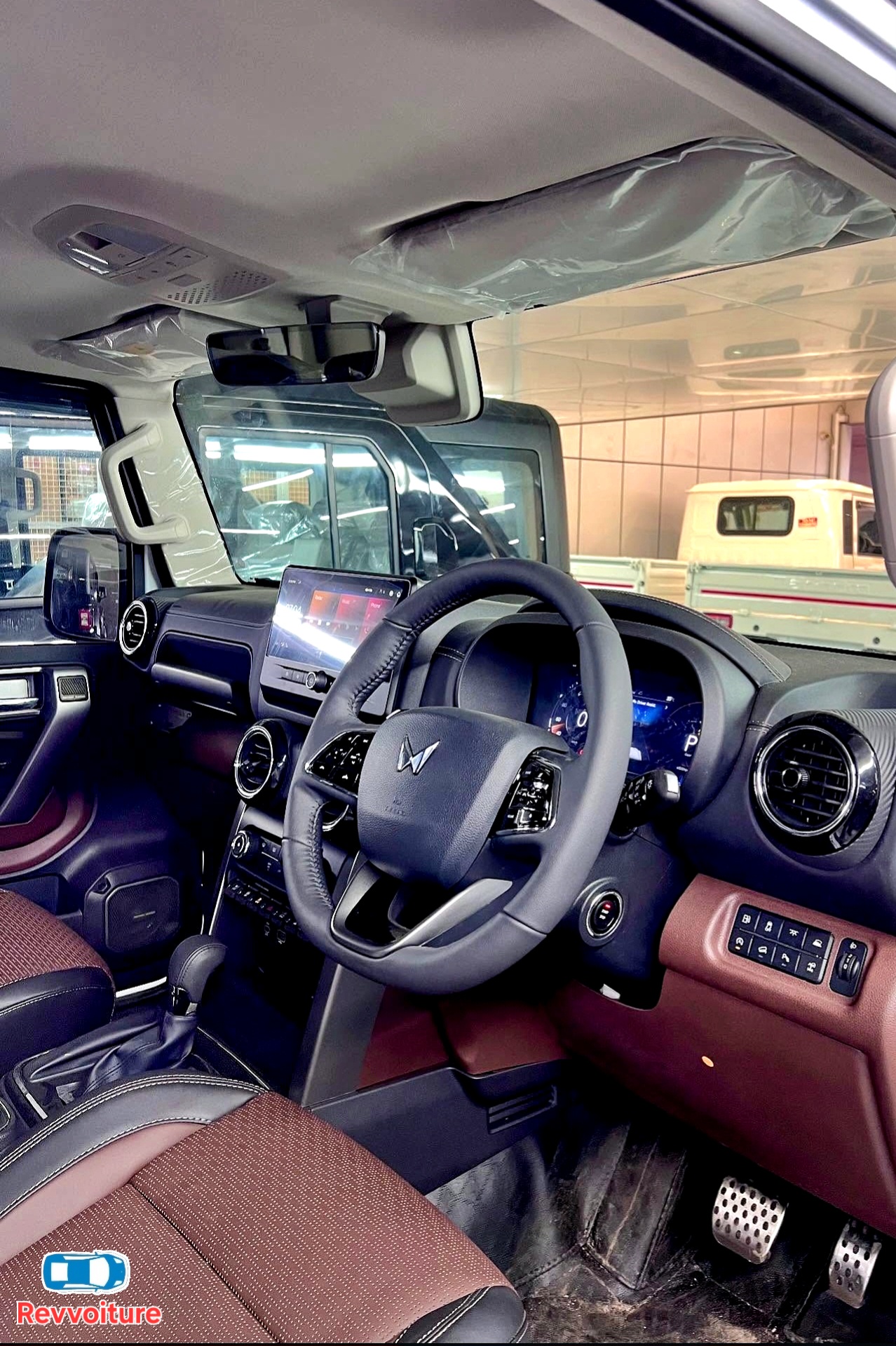
Getting into the Thar Roxx is easy, especially on the front seats. For the rear, the doors open 90 degrees, creating more space, but the protruding rear fenders can be a problem. Mahindra has given a handrest to take support, making it easy for the rear passengers to get in. The interior is in a dual-tone colour scheme, either Black with Ivory White or Black with Mocha Brown. The Star Edition, on the other had gets an all-Black interior scheme. Both the all-black and black with mocha brown seem fine, but ivory white does not weigh the Roxx's off-roading chances, but rather provides the customers with a level of luxury, almost like Mahindra wants people to focus on the Roxx as a family car and not an off-roader. The dashboard is same what was offered in the 3-door version, but it has a mix of soft-touch and hard plastic materials. The doors have Dual-Tone stitching as well. The power windows in the 3-door Thar were placed on the centre console, this design element was uncomfortable and disturbing. Thankfully, the buttons are now correctly placed on the doors. Leatherette upholstery, the steering wheel has leatherette as well. The headrest in the Star Edition has Alcantara. On the topic of headrests, the rear seat have 3 which are adjustable apart from the center one as adjusting that would hamper with the rear view for the driver, anyhow the rear view is limited because of the small glass and an extra tyre. Yes, the seats look very fancy, but the ergonomics are terrible, can't sit for very long. For practicality purposes, the Thar Roxx has given 447L of boot space, and folding the 60:40 split seats increases the space even more for suitcases and extra luggage, but it is really painful to see that Mahindra left something so basic and petty like proper bottle holders in the doors, the bottle holders we do get is really small and cannot fit a normal size bottle. Although there are cupholders on the centre console that can support coffee cups, their position is not good and may disturb the driver, especially in the manual 4X4 variant. The rear seats are the real deal for the Roxx, the seats recline to give more comfort, the rear window has a partition and only one part of the glass goes up & down, there are AC vents for the passengers, the arm rest on the rear seat has cupholders too, and the centre has no protruding hump so 3 can fit easily on the rear seats, so a good, spacious cabin, but still the ergonomics won't let you sit for long durations. None of the windows have sun shades, the automobile makers around the globe need to understand that sun shades are absolute necessity. Rear seats are for those who prioritise comfort and luxury over everything else, on the other hand, I would prefer the driving seat hands down, where the car tells its story in the form of poetry in motion. The flat-bottom steering wheel, with only tilt and no telescopic adjustment, is taken straight from the XUV700, and this steering wheel has left buttons to control the Infotainment System and the right buttons to control the MID screen. The sun visors are extendable, which is great, but they are way too big as compared to the size of the windshield and can obstruct the view. One can still see the bonnet while driving thanks to the seat position and ground clearance. Personally, I like that Mahindra kept some things the same from its first-gen Thar, it brings the essence of the SUV. Not just that, the Circular AC vents with Carbon Fibre outer cover, and AC controls are taken straight from the 3-door Thar. In the centre console we do get a manual gear shifter or an automatic gear selector. For the 4X4 variant, right next we get another shifter to shift between 2H, 4H & 4L. To provide the best sound system in the car, each door gets a speaker along with a tweeter as well. Massive improvement in the NVH (Noise, Vibration & Harshness) inside the cabin but still its less to perfect, could have been better with more insulation. Overall, Mahindra has tried its best to provide the perfect cabin for its buyers, and increase the fit and finish, especially with the dual-tone dashboard and stitching on the doors, still there is a big room for improvement. The cabin is now luxurious, but many customers have complained that the aluminium finish on the pedals comes off very easily.
Features
When advertising & selling a car in India, the brands, especially Hyundai, Kia & Tata, have completely cracked the hack. They add a hell of a lot features and technology elements to attract customers. Mahindra does not fall behind, and so have created the Roxx with a big list of features. I have to start with the Panoramic Sunroof available in the top variants and the Star Edition only, and it is the biggest sunroof in the segment currently. Also, cannot deny that both Mahindra and Tata have always received massive complaints about the insulation for the sunroof and have to constantly maintain it. Another killer of a feature is the 9-speaker Harman Kardon sound system with a combined output of 400W, adding to this is Mahindra's tie up with Dolby to get the Dolby Atmos immersive surround system for the car, but unfortunately its only available through the Gaana application in the top AX7L variant. Dolby Atmos is exclusive to the Gaana application, if playing using any other application, then we cannot use Dolby. So basically, we are already paying extra for the AX7L variant and then we have to pay for the monthly or yearly subscription of the Gaana application to use the Dolby Atmos feature, which sounds a bit of a hassle as compared to the results. 10.25-inch driver Instrument Cluster and a 10.25-inch Infotainment System with wireless Android Auto, and after a software update, Apple CarPlay too. This infotainment system also supports Alexa & Adrenox. Some of the features which are standard for all variants include push-button start, infotainment system, power windows, hill descent control, armrest, and a height-adjustable driver seat, although the top variant AX7L gets an electrically adjustable driver seat, and the Star Edition gets only a manual adjustment. When the Roxx was launched, there was no option for passive entry with a request button, but in the 2025 updated version, Mahindra provided the same for its top-end variant, and this is still not available in any variant of the 3-door Thar. 2 parking sensors at the front and 2 for the rear, combined with a 360-degree camera view, so parking this gigantic car would not be such a big problem. All the headlights, DRLs and the tail lights are LED, and even the fog lights we get are LED. 65W type-C ports and a USB port, along with that, Mahindra gives a Wireless Charger in the centre console, in my opinion, the wireless charger is the most worthless feature a car can have, it charges slow and takes more space which could have been used better otherwise. There are some valuable features as well in the Roxx like Auto-Dimming IRVM, Ventilated Seats, Automatic Headlights, and Rain-Sensing wipers. Mahindra has ditched the heavy Hydraulic steering from the 3-door Thar and replaced it with a softer and easier Electronic steering wheel. Ambient lighting, but only in the footwell for some reason. One touchdown mechanism, available only in the top-end variant but it is a must-have for all variants because this is going to be a lot helpful in the peak summer time. On the topic of must have, another thing which I believe should be made available to other variants as well is the Navigation Screen directly shown on the MID. The ORVM's can be electrically adjusted & the car starts breathing with the push of a button. The Glovebox has a cooling feature, thanks to a small AC vent. The 3-door Thar had adjustable lumbar support in the seats, but this is unfortunately missing in the Roxx.
Safety
Mahindra has always kept the safety standards of its cars at the top priority, be it the body strength or the safety features added to the car, all lead to a safe drive for the driver and the passenger. If we continue with the 3-door Thar, what parameters it touched and how was the overall safety levels. Well, it did manage to get a 5-star in the Bharat NCAP rating and 4-star in the Global NCAP with all advanced safety features so it was a win back then, and so the expectation graph of the Roxx increases exponentially. With the ladder-on-frame platform, the Thar Roxx also supports ADAS (Advanced Driver Assistance System) level 2 features like - Forward Collision Warning, Lane Keep Warning, Blind View Monitoring, and Adaptive Cruise Control, Autonomous Emergency Braking, Forward Collision Warning & Assist, Lane Departure Warning, Smart Pilot Assist, High Beam Assist, and Traffic Sign recognition. Unfortunately, ADAS Level 2 is available only in the top variant and not even in the Star Edition. This is a complete bust because brands need to understand that ADAS is much needed in cars today, especially on highways, so for other variants they should at least put Level 1 ADAS instead of 2, this can still save them cost and provide the best for their buyers. The TPMS (Tyre Pressure Monitoring System) is another important feature nowadays, which helps avoid any unwanted surprises. 6 airbags are standard in all variants, as well as ABS (Anti-lock Braking System), ESC (Electronic Stability Control) & BLD (Braking Lock Differential). The Thar Roxx also gets Traction Control, Hill Hold, and Hill Descent functions, and ISOFIX child seat mounts at the rear seats, which are an absolute necessity when traveling with a toddler. Never attempt to carry the baby on your arms while sitting on the passenger seats because in case of any accident, it would be the child taking the impact first. Speaking about the warranty, Mahindra offers a 3-year unlimited-kilometer warranty with an option to extend. The Roxx did manage to get a 5-star rating on the Bharat NCAP, but the global tests are still pending. The car is loaded with features, so I do expect it to get at least a 4-star Global NCAP rating like its cousin.
Conclusion
Mahindra had an idea, to get the best of both worlds and build a car that can perform well at off-roading activities and can be a comfortable yet luxurious car for a wholesome Indian family. The idea was good, but is the Thar Roxx answer to the problem? In a word, no! Yet, the sales figures at Mahindra HQ suggest otherwise, so what really happened? The Roxx does have a lot of features and serves as an open canvas to the creative heads at the accessory shops to make every car unique. It also has a good engine, but the top variant has a comparatively weaker diesel engine. The exterior design can be subjective, for some it could be a blend of old school and a hearty handshake to the new generation, and for some it could be an absolute ugly affair. A lot of the customers have historically raised complaints regarding faulty electrical systems where the infotainment system freezes or the camera freezes and unfortunately, Mahindra has still not completely rectified the same. This is something a buyer for the Thar needs to accept if looking at the bigger picture. With extra long wheelbase, off-roading capabilities are way low than what the 3-door Thar could do. Ivory white seats are an alarming interior design element that discourages you to step out on small puddles so forget about muddy roads and camping on rocky terrains. So basically, the 5-door Thar Roxx is not an off-roader car, its a city car with an old-school vibe that can fit a family of 5 members. It is a brobdingnagian monstrosity, its immensely huge but unfortunately that gives a car a good road presence and not ability to conquer a mountain. In my opinion, if one is looking specifically for an off-roader car, then I am sorry but this car is not for you. For a good off-roading experience, one can go for either Suzuki Jimny, or a Toyota Heliux if the budget is good, or can even wait for the updated version of the 3-door Thar expected to launch this year. But if one is dead stuck on a family city car with an old school vibe that, sort off, increases their respect among dear ones then be my guest and get the Thar Roxx top variant AX7L.